At Cranbourne South Primary School, our shared moral purpose is to ensure every child can learn, grow and achieve. We believe every student deserves to be known, valued, supported and challenged, and that every child can make meaningful programs when provided with high quality teaching, strong relationships and the right opportunities to learn.
Our moral purpose is the foundation of our decisions, actions and collective responsibility. It shapes how we plan and deliver the curriculum, design learning experiences, assess student progress and respond to individual needs. It challenges us to look beyond where students are now and consider what they need next to continue growing, ensuring that every student experiences both the support and the challenge necessary to reach their potential.
Provide a safe, supportive & inclusive learning environment.
Teach engaging lessons with clear purpose.
Use Learning Intentions and Success Criteria to guide and assess learning.
Use assessment to inform teaching decisions and meet every student's learning needs.
Be responsive to students' learning needs in real time.
Provide a safe, supportive & inclusive learning environment.
Plan purposefully. Teach intentionally.
Use assessment to differentiate teaching and meet students at their point of need.
Use Learning Intentions and Success Criteria to guide and assess learning throughout lessons.
Respond to students’ learning needs in real time.
Provide a safe, supportive & inclusive learning environment.
Teach engaging lessons with clear purpose.
Use Learning Intentions and Success Criteria to guide learning and assess understanding throughout each lesson.
Use assessment to inform teaching decisions (differentiation), meeting every student at their point of need.
Be responsive to students' learning needs in real time.
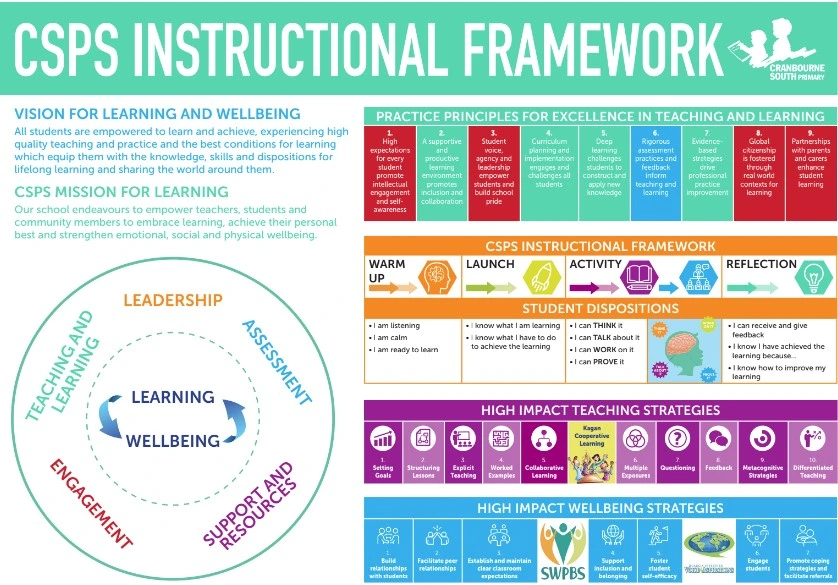
At Cranbourne South Primary School, we provide a comprehensive, rigorous, and engaging curriculum based on the Victorian Curriculum. Our dedicated teachers use evidence-based instructional practices to ensure every student is challenged and supported to achieve their personal best.
At CSPS we understand how vital literacy skills are to support all learning and use evidence-based methods to ensure all students succeed and thrive in this area.
Explicit and systematic teaching of fundamental knowledge and skills is the pillar of our approach at CSPS to provide the best possible environment for all students develop the ability to read, write and understand the rules that govern the English language.
Reading is made of 6 key areas:
Our structured reading and writing approach includes:
Teachers model CAFE strategies and use the Department of Education’s Literacy Toolkit to develop a love for reading, writing and listening and speaking. Each student chooses their own texts from the rich sources in the CSPS library.
Teachers are continually assessing and updating student goals through conferencing and strategy groups and use non-negotiable curriculum standards for student achievement at each level. Students also develop their own individual goals through conferencing and self reflection.
All students participate in a daily 2 period literacy block, one period for reading and one period for writing. These lessons follows our Cranbourne South Instructional Model Framework and consists of tuning in activities, explicit teaching, independent practice and a review based on gradual release. Teachers explicitly teach reading and writing skills through shared reading or modelled writing at the beginning of each lesson.
During independent practice time, teachers conference with students to set goals or are involved in strategy groups based on student needs. All students Year 2 to 6 have a Reader’s and Writer’s Notebook in which they record their reading responses and ideas for writing.
Students who need extra support or extension are catered for through intervention and extension opportunities both within the classroom and targeted withdrawal groups implemented by expert teachers. These students may be provided with Individual Education Plans to personalise their learning.
The students in Foundation to Year 2 are taught to read using a synthetic phonics approach. This program provides a very highly structured, multi-sensory, incremental and code-oriented, instructional approach to teaching children to read and spell.
At the start of the program, simple, one sound/one spelling, one-syllable, CVC words only are introduced. As the program progresses, the complexity of one-syllable words is increased to four-, five- and six-sound words of the structure CVCC, CCVC, CCVCC/CCCVCC, before introducing the most common consonant digraphs. (C – consonant, V – vowel).
Once the initial code is introduced, all the remaining common vowel and consonant sound to spelling correspondences are taught until all the common spellings for the forty-four sounds in English have been covered. In parallel with this, students are taught how to read and spell polysyllabic words, progressing from two-syllable to five and six-syllable words.
At CSPS we are dedicated to ensuring our students are ready for learning by cultivating a culture of mathematical curiosity and creativity, where students, teachers and families will influence greater positive attitudes towards mathematical achievement
The mathematics learning area of the Victorian Curriculum is directed toward developing four proficiencies in students, which include:
Jo Boaler, professor of mathematics education at Stanford University, draws on these proficiencies and the ‘growth mindset’ work of Carol Dweck to explore the dispositions necessary for developing ‘mathematical mindsets’.
The most prominent of these dispositions relate to:
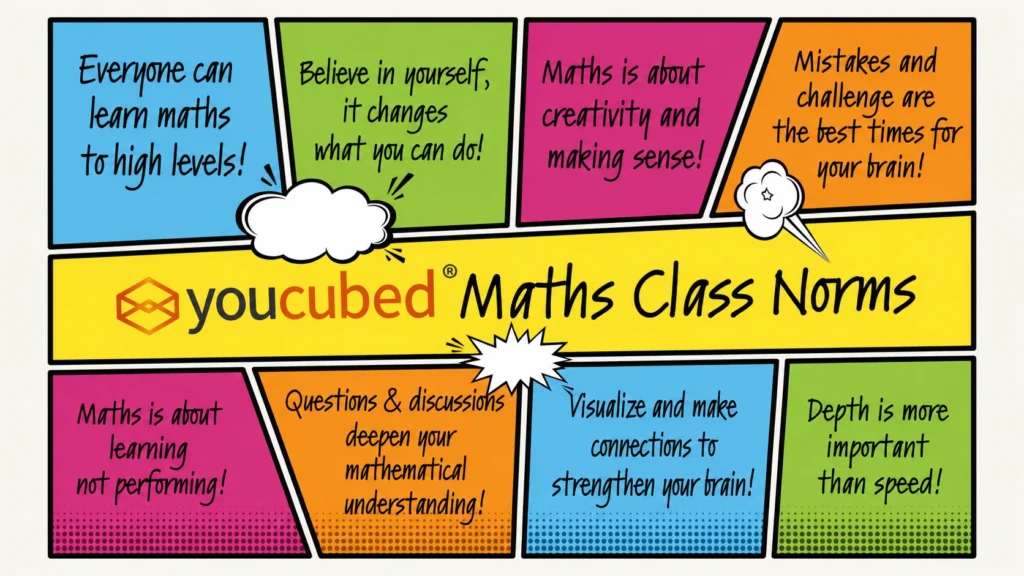
Our Maths philosophy for our students is nurturing a growth mindset as a maths learner. In order to do this well the philosophy is introduced at the beginning of every year with the first 8 days “Setting the Climate.” This philosophy is re-introduced throughout the year where needed.
This philosophy embeds the works of Jo Boaler in creating “positive norms in our maths program” and addresses maths anxiety within our students by targeting any barrier to learning. Jo Boaler’s strategies are used to reduce any negative effects on learning.
Along with creating positive norms in our maths program we believe students need to understand the disposition of a maths learner. The 4 proficiencies of reasoning, fluency, problem solving and understanding is embedded through the process of how students learn to think about maths. Nurturing creativity and curiosity through the visual elements of maths by thinking about what they see, creating the need to talk about it, working on it and finally proving it, incorporates all 4 proficiencies and generates a mathematical learner process that is easy to follow and not necessarily linear. Using a visual process for “How I Think and Learn About Maths” in maths lessons ensures our learners will make real world connections that are relevant and have purpose within their context.
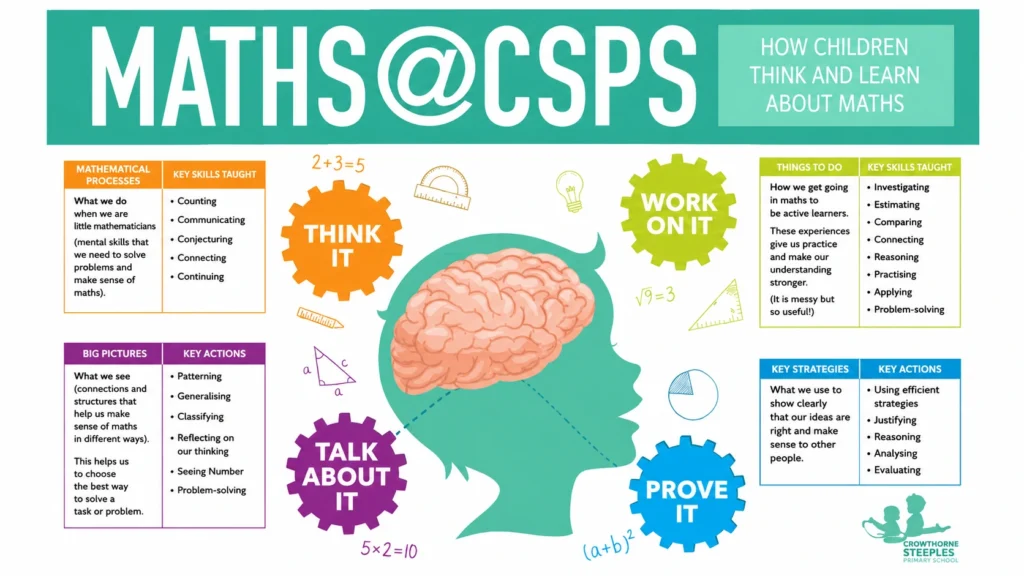
We encourage our community through our philosophy of “Nurturing creativity and curiosity in maths to influence positive attitudes in mathematical achievement” through communication channels of inewsletter, seesaw, compass, educational celebrations and information nights. Maths@CSPS will be consciously visible to ensure our community is incorporated in our philosophy.
Maths lessons have a learning intention and success criteria that outline the expectations of learning and what success looks like. Each lesson follows a specific structure of instruction.
Student voice and agency comes from within the lesson. Allowing students to explore their thinking through open ended tasks and lesson structures, coupled with the “how we think and learn about maths” creates options for students to collaborate and make their own assumptions and justifications.
At CSPS we invite the community to be part of our lessons as parent helpers within the classroom. Parent participation in maths workshops or community information nights are an important part of influencing positive maths attitudes for every child.
Our STEM program is designed to
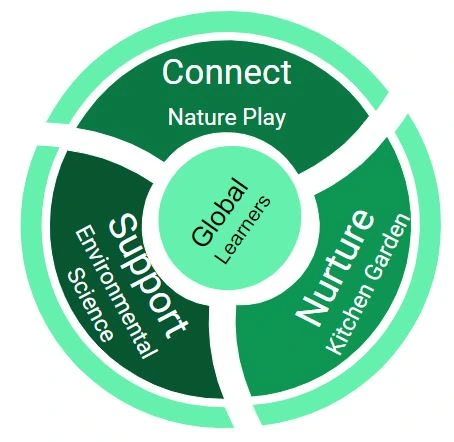
The Sustainability and Environment Team aims to provide students with authentic and meaningful opportunities to engage with the environment and in so doing learn to understand and respect the environment of CSPS and the wider world.
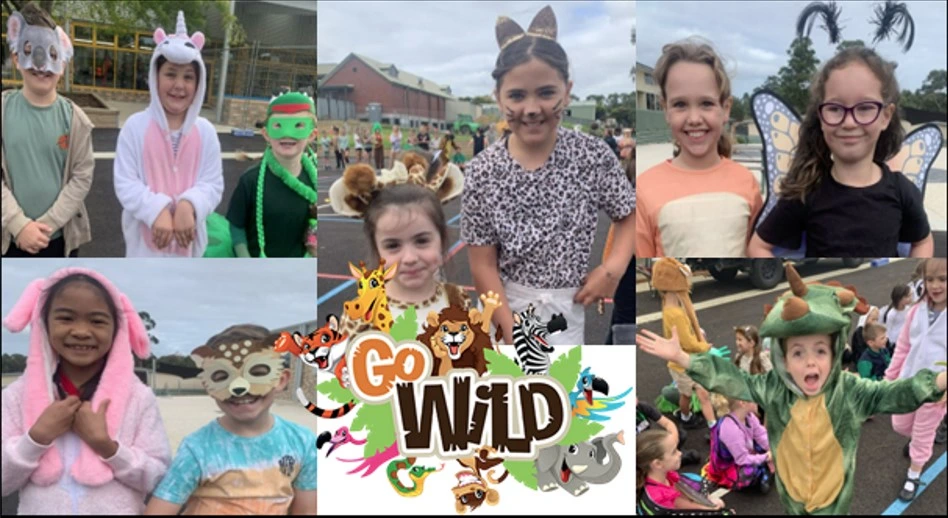
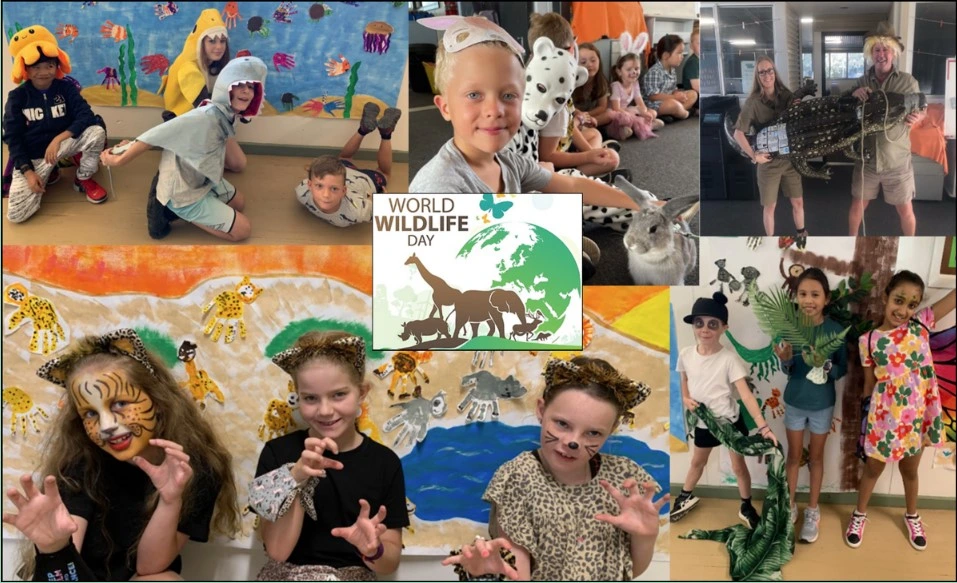
The team is made up of two students from each class across the whole school and designed to foster student voice. Our students strategically plan an environmental campaign to focus on each term. In 2020 we celebrated World Environment Day by creating a whole school mural, the theme was Sustaining All Life on Earth and the students chose to focus on native Australian animals, it was an amazing effort from all at CSPS.
Some achievements of our Sustainability and Environment Team include:
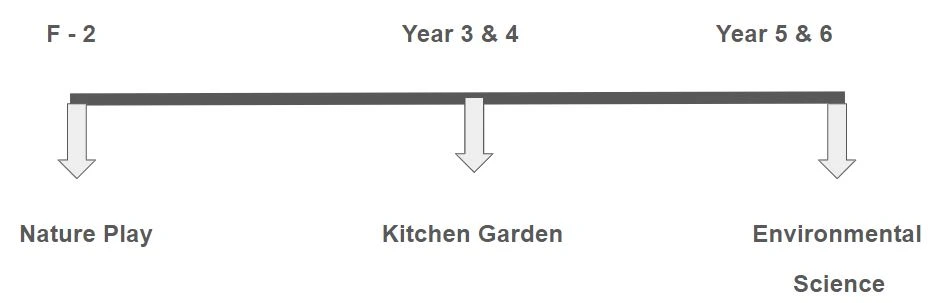
Cranbourne South Primary School is one of many primary schools across Australia that is associated with the Stephanie Alexander Kitchen Garden
Program. In 2018 we received a grant from the Stephanie Alexander Kitchen Garden Foundation to build our beautiful garden and since then CSPS has embraced the Foundations philosophy of ‘Growing, Harvesting and Sharing’.
We aim to give our students the capability and experience to grow their own foods and the skills and desire to make healthy and nutritious food choices. Vegetable gardens create a meaningful connection between where food comes from and establishing healthy eating habits. Once children plant a seed and watch it grow, they are invested in tasting it. Healthy eating habits are established at an early age but continue to develop through adolescence and into adulthood, so a kitchen garden is useful in promoting and establishing healthy eating for students of all ages.
Gardening, cooking and working co-operatively are real-world skills that will stand today’s students in good stead for their future.
The iSea iCare Ambassador Program is designed for students in Years 5. It was developed by the Dolphin Research Institute to show Victorians that
“what lives around our coast is too precious to lose”.
Each year four students are chosen to be Ambassadors for that year, they learn about what lives in our bays and waterways, and the many issues facing them. The Sea iCare program takes a long-term strategic approach and has a proven track record of developing young leaders. It provides them with real
and relevant experiences that enrich them and the school community.
Through peer-teaching workshops, the Ambassadors develop the skills and self-confidence to pass their knowledge on and become advocates for the
environment. They tell their peers, lower classes, school assemblies and other groups about Victoria’s Living Marine Treasures, and that they’re too
precious to lose!
There are four workshops throughout each ‘i sea, i care’ year. One of the extra activities and a favourtie of the Ambassadors is swimming with the
Seals and Dolphins in Port Phillip Bay. This extrodinary experience allows the students to make a deep connection with the marine envirionment and further their understanding of the importance of the marine environment.
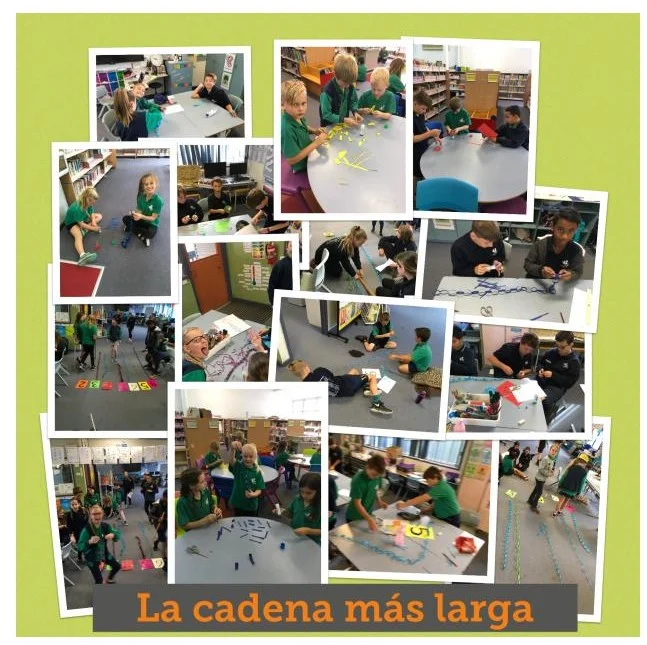
At Cranbourne South Primary School our students (Foundation – Year 6) engage in learning Spanish to work towards creating learners who grow into responsible, happy, resilient and socially fulfilled individuals. All students actively participate in language other than English (LOTE) studies through learning the Spanish language such as greetings, colors, numbers and discovering cultural traditions, special events and customs. Each week, students participate in a Spanish lesson that is facilitated by their classroom teacher.
Year 3 – 6 students also have the opportunity to participate in an online learning platform to further their Spanish language development. Education Perfect EP Languages is an online language learning platform which provides lessons to practise all the key skills involved in language learning: listening, reading, writing, speaking, grammar and vocabulary.
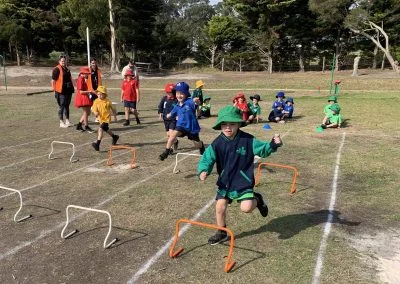
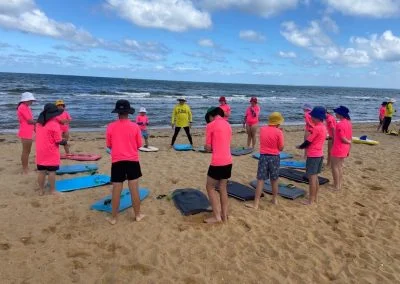
Our Physical Education (PE) program is designed to prepare students to lead a healthy lifestyle by fostering lifelong participation in physical activity in a fun and enjoyable manner. We focus on the development of skills, knowledge and team work.
Students develop fundamental movement skills such as: balancing, running, hopping, skipping, galloping, leaping, throwing, catching, striking and kicking. This is done through a variety of activity stations and modified games.
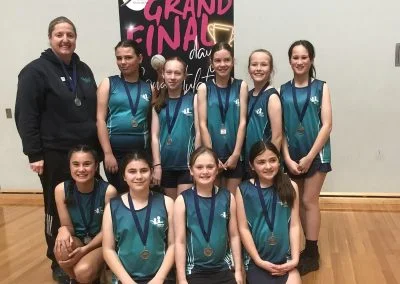
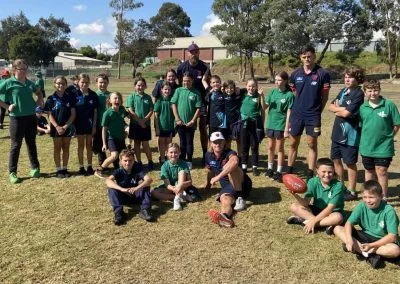
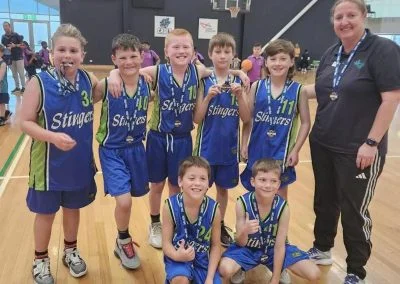
Students continue to develop fundamental movement skills and apply them in game situations through modified games and traditional major sports. Students develop their awareness of time and space along with knowledge of game strategies.
Please click on the link to view our CSPS Swimming Action Plan
Social Wellbeing at Cranbourne South refers to the relationships we have and how we interact with others. Social wellness involves building healthy, nurturing, and supportive relationships as well as fostering a genuine connection with those around you. We provide students with the opportunity to develop the tools necessary to thrive, contribute and respond positively to challenges and opportunities of life.
Through the use of co-operative learning, the Zones of Regulation and Peaceful Kids mindfulness, run each week in specialist lessons. These programs help to create social inclusion and a sense of belonging.
Our Health program is integrated across all aspects of the curriculum. Students develop the knowledge, understanding and skills to strengthen their sense of self, and build and manage satisfying relationships. They build resilience and develop skills needed to make decisions which enable them to be healthy and safe.
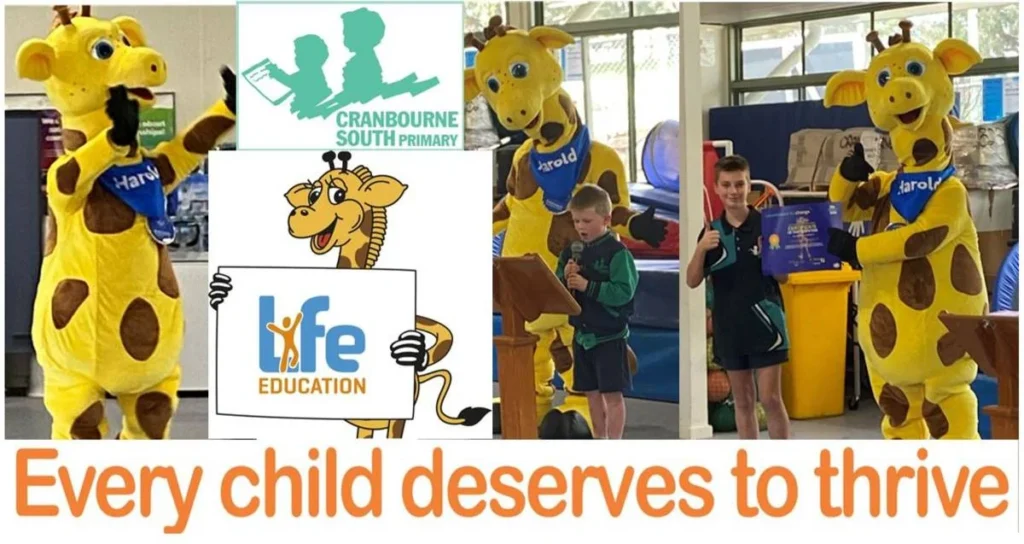
As part of our Health program we work in consultation with Life Education Victoria to deliver an interactive program that focuses on social and emotional, health and wellbeing. The program empowers students with knowledge, skills and attitudes they need to make informed decisions about their health. Topics covered at an age-appropriate level include personal safety, food and nutrition, physical activity, social and emotional wellbeing, the human body, drugs and alcohol. All of which are directly linked to the Victorian Health and Physical Education curriculum.
As part of the Victorian Health and Physical Education curriculum, schools provide sexuality education. This focuses on the social, emotional and physical changes associated with growing up and laying the foundation for healthy relationships now and in the future.
Assessment and Reporting are integral parts of the teaching and learning program at Cranbourne South Primary School and important aspects of the work of teachers and students. Assessment & Reporting combine to support students to achieve high standards and to provide the basis for guiding further learning, as well as informing parents about their child’s achievement.